
Education-Led Marketing for Pet Health Brands (And Why It Drives Repeat Sales)

Why Education Is the Strongest Driver of Repeat Sales in 2026 (With a real-world case study from CocoTherapy)
Many pet health brands do not lose customers because their products stop working.
They lose customers because the customer never fully understood:
how to use the product correctly
what realistic outcomes look like
why consistency matters
how the product fits into a long-term care routine
when and why to reorder
In 2026, retention in pet health is no longer a loyalty problem.
It is an education architecture problem.
As competition increases, paid acquisition becomes less forgiving, and trust expectations rise, brands that rely on persuasion alone plateau. Brands that build structured education systems compound.
Why Pet Health Is Structurally Different From Most Ecommerce Categories

Most ecommerce categories are transactional.
Pet health is responsibility-based.
Pet parents are not making a discretionary purchase. They are making a decision on behalf of a dependent being who cannot consent, communicate symptoms clearly, or correct misuse.
This changes how marketing must work.
Core Differences That Make Education Non-Optional
| Structural Reality | Impact on Marketing |
|---|---|
| Products affect health outcomes | Claims must be careful and credible |
| Results are often delayed | Expectations must be managed |
| Usage is routine-based | Education must reinforce consistency |
| Anxiety drives decision-making | Trust outweighs urgency |
| Regulatory constraints exist | Explanation beats exaggeration |
In this category, silence creates doubt. Doubt kills retention.
The Misunderstanding About Retention in Pet Brands

Many pet brands interpret retention issues as:
weak loyalty
price sensitivity
subscription friction
insufficient incentives
They respond with:
discounts
bundles
loyalty points
reminder emails
These tools can help at the margins. They do not solve the core issue when education is fragmented or absent.
Customers do not repeat because they are rewarded. They repeat because they are confident.
Confidence comes from understanding.
What Education-Led Marketing Actually Means in Practice

Education-led marketing is often misunderstood as:
longer blog posts
more educational captions
more FAQs
That is not education. That is information volume.
Education-led marketing is the intentional sequencing of understanding over time.
It answers the right question at the right moment, through the right channel, without overwhelming the customer.
Education Is a System, Not Content
High-performing pet brands treat education as infrastructure.
Education System vs Content Output
| Content-First Approach | Education-Led System |
|---|---|
| Posts created ad hoc | Content mapped to customer journey |
| Education scattered | Education layered intentionally |
| Founder explains repeatedly | System carries the explanation |
| Support fills gaps | Education prevents confusion |
| Retention feels reactive | Retention compounds naturally |
This shift is where most brands either scale or stall.
Where Education Breaks Down as Brands Grow

1. After the First Purchase
Many brands over-invest in pre-purchase education and under-invest in post-purchase guidance.
Customers receive the product and ask:
Am I using this correctly
Is this normal
How long should I continue
What should I expect next
When these questions go unanswered, churn increases quietly.
2. During SKU Expansion
As brands launch:
new formulas
new dosage formats
complementary products
Education resets unless it has been systemized.
Customers are forced to relearn the brand instead of deepening trust.
3. As Teams Scale
When marketing, support, and operations separate, education fragments.
Marketing promises one thing.
Support explains another.
The website says something else.
Inconsistency erodes authority.
The Role of Education in Repeat Purchase Behavior

Repeat purchase in pet health is driven by three factors.
1. Expectation Alignment
Customers need to understand:
what success looks like
how long it takes
what variability is normal
Without expectation alignment, even effective products feel disappointing.
2. Routine Normalization
Pet health products work best when they become:
habitual
predictable
integrated into daily or monthly care
Education reframes the product from a purchase to a practice.
3. Risk Reduction
Education reduces perceived risk by:
explaining ingredients
clarifying usage
reinforcing safety
addressing edge cases
Lower perceived risk equals higher reorders.
Why Education Outperforms Discounts for Long-Term Retention
Discounts change behaviour temporarily.
Education changes belief.
| Discount-Led Retention | Education-Led Retention |
|---|---|
| Trains deal dependency | Builds intrinsic commitment |
| Erodes margin | Protects pricing power |
| Encourages stockpiling | Encourages routine |
| Short-term lift | Long-term stability |
| Stops working when removed | Compounds over time |
In 2026, brands that rely on perpetual incentives will lose to brands that build understanding.
Compliance Is Not a Limitation

It Is an Advantage When Used Correctly
Pet health brands often view compliance as a constraint.
Education-led marketing turns it into a strength.
Instead of claiming outcomes, education:
explains mechanisms
contextualizes benefits
sets boundaries clearly
builds credibility through restraint
This approach builds trust with:
customers
retailers
veterinarians
regulators
Trust compounds across channels.
What an Education System Looks Like for Pet Health Brands
A functional education system includes multiple connected layers.
Core Education Layers
| Layer | Purpose |
|---|---|
| Ingredient education | Build formulation trust |
| Usage guidance | Prevent misuse and drop-off |
| Expectation setting | Reduce churn and refunds |
| Routine framing | Support repeat behavior |
| FAQ infrastructure | Reduce support load |
| Content sequencing | Deliver clarity progressively |
Each layer reinforces the others.
Education Reduces Founder Dependency
Without systems, founders become the education layer.
| Without Systems | With Systems |
|---|---|
| Founder becomes the primary education layer | Education scales without founder presence |
| Ingredients explained repeatedly | Core explanations documented and reusable |
| Misconceptions clarified manually | Misconceptions addressed proactively |
| Same questions answered across multiple channels | Consistent answers delivered across the journey |
| Decisions feel reactive | Decisions become clearer |
| Marketing feels scattered | Marketing becomes focused |
| Support load increases with growth | Support becomes lighter as volume grows |
This is often the point where growth quietly stalls.
Not because demand disappears, but because the founder is still carrying the education load the business has outgrown. Every explanation, clarification, and follow-up becomes a bottleneck. Marketing activity increases, but understanding does not.
This is the same transition stage where many pet brands hit the six-figure plateau. The product works. Customers are interested. But without systemised education, growth stops compounding and starts depending on constant founder involvement.
If this feels familiar, it is a structural issue, not a performance one.
We break down this transition in detail in Why Most Pet Brands Struggle to Scale After Their First Six Figures, and why education ownership is often the missing piece.
Education Compounds Over Time

Unlike ads, education does not reset.
Each asset:
reinforces previous understanding
supports future purchases
lowers friction across the funnel
This is why education-led brands see:
higher lifetime value
stronger subscription adherence
fewer reactive campaigns
steadier growth curves
Education Is Architecture

Not Volume
More content does not equal better education.
Structure does.
Education-led marketing treats content as:
infrastructure
systems
long-term assets
Not as posts to be filled on a calendar. What this looks like in practice is not theoretical.
Here is how an education-led system changed retention and repeat revenue for a pet health brand with a simple but high-trust product.
Case Study: Building an Education System That Drives Repeat Revenue
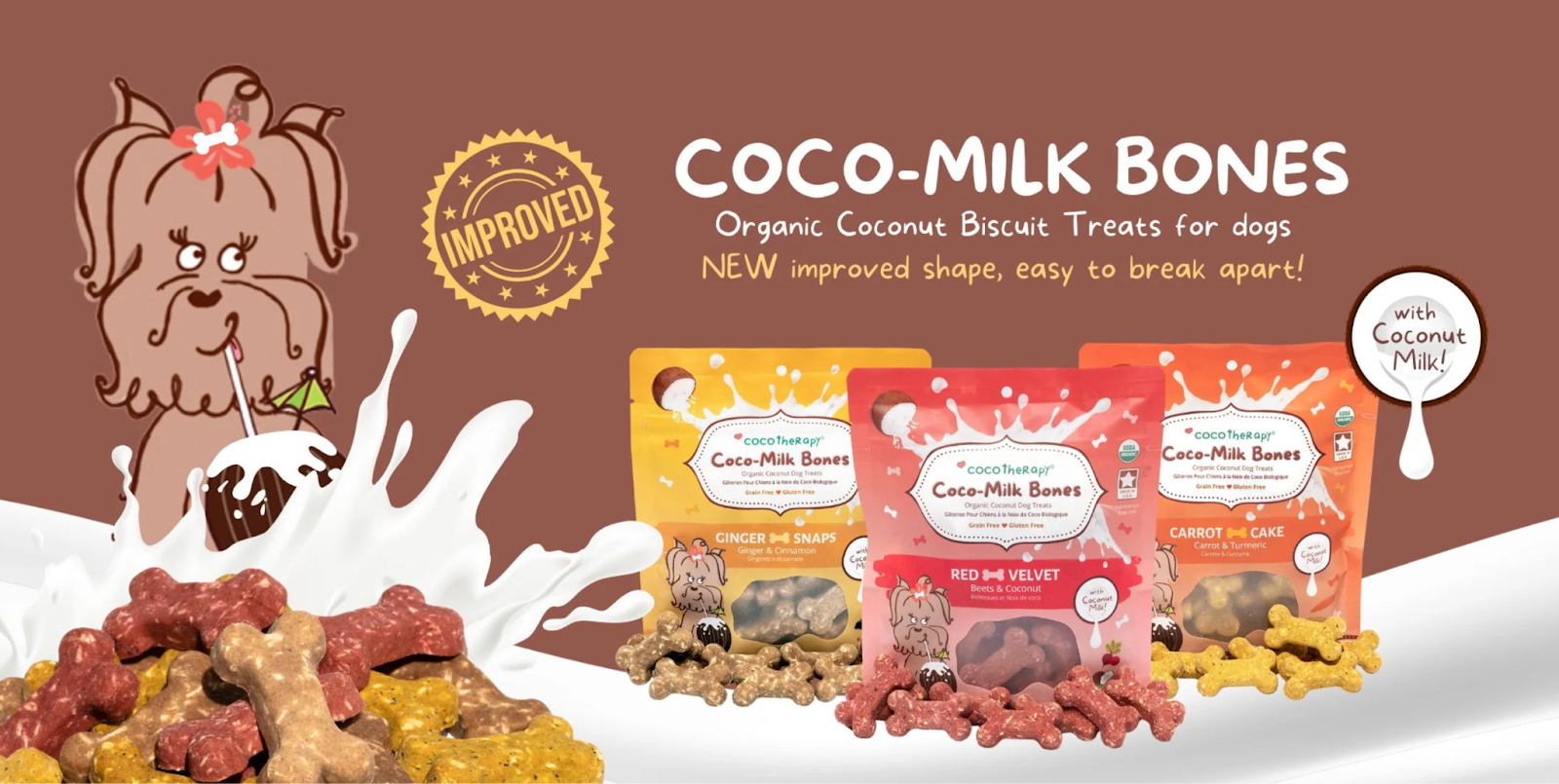
Brand: CocoTherapy
Category: Virgin coconut oil formulated for dogs, used for digestion, skin and coat health, and daily supplementation
Focus: Education-led retention and repeat purchase growth
CocoTherapy sells a product that is simple in form but complex in use. Coconut oil for dogs requires correct dosage, consistent use, and realistic expectations to deliver results over time. Like many pet health brands, CocoTherapy’s early growth depended heavily on founder-led explanations, reactive customer support, and educational content scattered across blogs, emails, and social media.
As order volume increased, education stopped scaling.
Customers repeatedly asked the same questions after purchase: how much coconut oil to use, how often to give it, what outcomes were normal, and when to reorder. This confusion did not immediately appear as churn. Instead, it showed up quietly as delayed repeat purchases, inconsistent usage, and growing support load.
The product worked. The education system did not yet scale.
The Problem: When Education Doesn’t Scale, Retention Breaks Quietly
CocoTherapy already had a values-aligned audience and strong trust in its ingredients. However, retention relied more on reminders than understanding.
Key challenges included:
Education fragmented across product pages, social content, and customer support
Founder involvement required to explain dosage, expectations, and routines
Repeat purchases driven by nudges instead of confidence
Revenue spikes tied to campaigns rather than compounding behaviour
Without a structured education system, customers were forced to piece together information themselves. Uncertainty slowed repeat purchasing even when satisfaction remained high.
The Solution: Education as a System, Not Content
Instead of producing more content or launching new campaigns, the focus shifted to education architecture.
Karya designed a structured, education-led marketing system that mapped understanding intentionally across the customer journey. The goal was not persuasion, urgency, or incentives. It was clarity.
The system focused on:
Clear dosage and usage guidance tied to dog size and daily routines
Explicit expectation setting around timelines, variability, and outcomes
Framing coconut oil as a long-term care practice, not a one-time fix
Post-purchase guidance that reduced uncertainty without increasing support tickets
Education was embedded across:
Pre-purchase content
Product pages and FAQs
Post-purchase flows
Ongoing routine-based reinforcement
This approach reduced reliance on founder explanations while creating a consistent, confidence-building experience for customers.
CocoTherapy Performance After Implementing Education-Led Systems
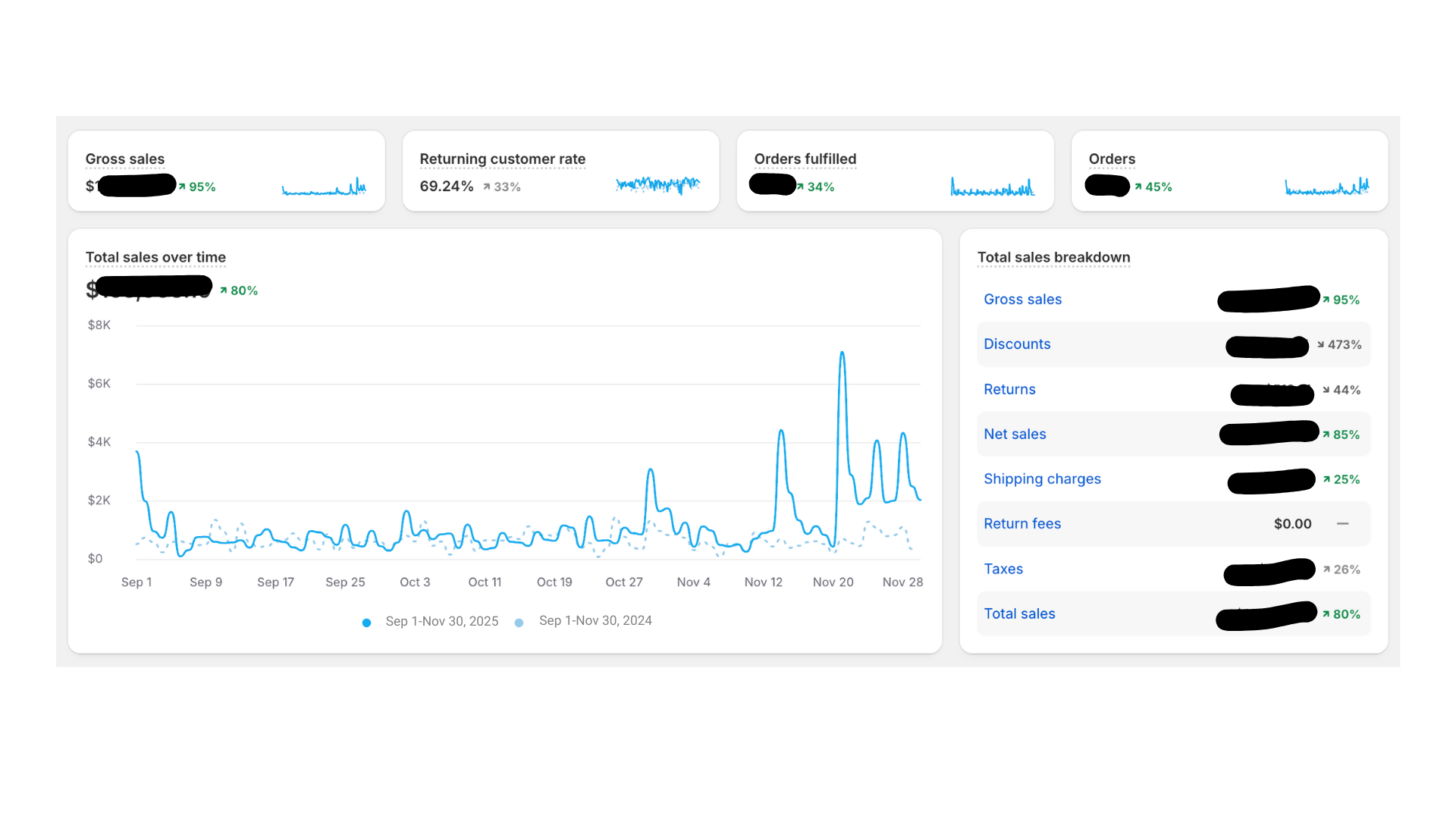
CocoTherapy performance following the implementation of a structured education-led marketing system focused on routine clarity and post-purchase guidance. Growth reflects increased repeat purchases rather than discount-driven spikes.
The Results: Repeat Revenue Without Discount Dependence
After implementing education-led systems:
Gross sales increased by 95%
Returning customer rate reached 69.24%, a 33% increase
Total orders grew by 45%
Orders fulfilled increased by 34%
Net sales rose by 85%, without relying on aggressive discounting
Growth became steadier and less reactive. Repeat purchases were driven by understanding, not incentives.
Why This Matters
These results were not driven by higher ad spend or increased promotional pressure. They came from reducing confusion.
When customers understood how to use CocoTherapy correctly, what to expect over time, and why consistency mattered, repeat behaviour followed naturally. Education stopped being a reactive support function and became an operational asset.
For pet health brands that depend on trust, routine, and long-term use, education is not optional. It replaces founder dependency, reduces support load, and turns products into practices.
If you are evaluating outside support, this is where partner choice matters most. Here is what to look for in a marketing partner for pet health brands, and where many founders go wrong.
→ What to Look for in a Marketing Partner for Pet Health Brands
What Actually Changed
Before
Education lived in fragments across content, support, and founder explanations
Retention relied on reminders and manual follow-ups
Growth spiked during campaigns, then reset
Founder involvement increased as order volume grew
After
Education functioned as infrastructure
Customers understood how to use the product and when to reorder
Repeat behaviour became routine, not reactive
Revenue growth compounded over time
1. Education reduced confusion.
2. Clarity increased confidence.
3. Confidence drove repeat sales.
The Deeper Insight
This shift was not driven by more marketing. Instead, it was driven by better structure.
For pet health brands, retention is rarely a loyalty problem. It is usually an education problem.
When education is systemised:
customers stay longer
support load decreases
founders regain focus
growth becomes defensible
How This Applies to Your Brand
If your product depends on:
trust
correct usage
consistency over time
long-term health routines
then education is not optional.
It is your growth engine.
This is how we build education-led marketing systems that convert.
Keep in mind, this approach works best for pet health brands selling routine-based products where long-term use, trust, and correct education matter more than impulse conversion.
Education is not content. It is infrastructure.
If your pet health brand depends on trust, correct usage, and repeat purchasing, education is your growth engine.
We design education-led marketing systems that reduce founder dependency and drive repeat revenue without discount pressure.
If you want to see how this works in practice and whether it is right for your stage, you can explore how we work or book a strategy call.
